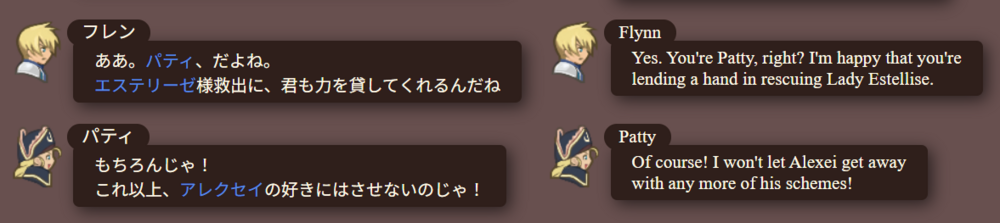
The sentence is somebody talking to someone else: "力を貸してくれるんだね." I think I get the gist of it, requesting help, but what tone does it have and what would an actual translation be? If んだ is an order, that seems a bit domineering, but I've always thought of ね as softening things, but it's not a question, so I'm just very confused trying to figure out the emotional tone to it.
It really depends on tone and context, but it's definitely not an order. It can feel a bit like "You did say you'd help, right?" or a softer, more relieved "Oh, so you're helping".
At most, in a slightly "probing" tone, it might come across as "So... you are helping, right?"
For example, 力を貸してくれるんだね? in a neutral tone would be something like "So you're willing to help?" Meanwhile, では力を貸してくれるんだね? would be closer to "In that case... you will help us, right?"
And in something like Xも力を貸してくれるんだね, it would simply be "So even X will help us / is willing to help us".
Either way, it's not an order and not something inherently domineering. んだね here is doing something more like "so that's the situation, huh". It's generally not confrontational in itself, and it's usually not a direct request either. It's more like confirming/acknowledging assumed willingness or already-emerging agreement, if that makes sense.
It's difficult for me to give you a good answer with zero context.
Can't tell without context, there's a few ones. It's not really a request or an order tho. It's more like a statement full of thoughts. Would need to see the face of the speaker to guess if there's isn't anything else. It could be "You're going to help, right?" and behind something like "Even if I told you to not help..." or "You're really a nice person". It could be bitter, it could be positive, can't tell with just that to be honest. With just that sentence, that what I though first. Some surprise maybe too
There's not any context as far as anything being said; nobody else has spoken at all. It's a freshly traumatized kid talking to his newborn dragon, and I'm just unsure whether to take it as more of a kind, "You're going to help me, right?" or a more dominant "You will help me (get revenge)." thing. With the way the arcs end up going it could genuinely be either
The other sentences don't help much either, because that quote comes AFTER lines about how the kid is gently petting the dragon and BEFORE a line about anger in the kid's eyes (anger at the situation, not the dragon, but still) So unless there's a specific grammar clue for tone I am baffled into the floor with this one.
(I guess I should add that the dragon's name is used directly before the sentence ("[Name]。。。力を貸してくれるんだね") but I just assume that doesn't matter)
Based on that description I'd say it's something like "You'll help me... right, [Name]?". Not a command, more like a fragile confirmation of an emotional bond that's just forming under stress... I guess.
I can tell you that it's not a domineering order/command. That's just not how that structure is used. I find it hard to read it as "do this" / "you WILL do this".
It can maybe drift toward "you'll help me" emotionally, but it's still not inherently domineering or really a direct order at all.
May I ask how the meaning would change without んだ? I thought I saw once that it designates an informal order, so why is it needed here if the sentence isn't a direct order? (I'm very sorry if I ask too many overly specific questions )
I think it's the explanatory のだ → んだ + ね. Not an order/command at all. Should be clear from this example:
The speaker here is doing something like:
piecing together the situation
confirming an assumption
reacting to the fact that the other person is joining in
If you dropped んだ : 力を貸してくれるんだね → 力を貸してくれるね, you now have a simpler/flatter and more direct "You'll help, right?"
Which, at least to me, doesn't make sense in this example. Ending a pretty context-heavy setup with a bare ね is pretty awkward, because the speaker isn't just asking a simple question.
In your example if you dropped んだ it may end up sounding oddly flat or even slightly detached. it does a lot, even if it might not seem like it.


 )
)