やれやれ and まぁまぁ are not really aizuchi (相槌)
aizuchi is more about simply showing that you're paying attention to the conversation with expression like そうか、そうですか、うん、なるほどね、etc. They don't give, by themselves and most of time, any indications about personality nor their age.
やれやれ has been overused in anime, so, I guess it could give some otaku vibes in a lot of case.
まぁまぁ is common but doesn't say that much about their personalities or social groups.
あらあら is bit stereotypical and used caricaturaly by お姉さん characters.
あらら express some kind of suprise but is not really stereotypical, I think?
But none of them really tell that much about personality by themselves. At most, with the example you gave, you can guess which one is older. Because you probably won't those expression often with someone older than you.
If you're interested in how words, speech pattern, etc can express personality, you should look at things like 役割語 or てよだわ言葉.
But honnestly, I think, it will be difficult to find correct informations if you still can't read japanese. But basically, it's not a matter of a single word 90% of the time but their whole speech. Speech pattern also change quickly and often. See てよだわ言葉 were てよ and だわ were used often by schoolgirl during meiji. That kind of stuff still happen today.
If you take the example of the particle わ, in renshuu you have that definition:
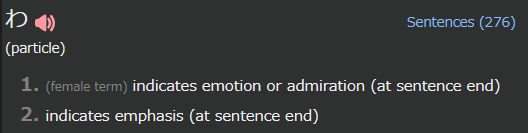
In japanese dictionaries on the other, you will find that:
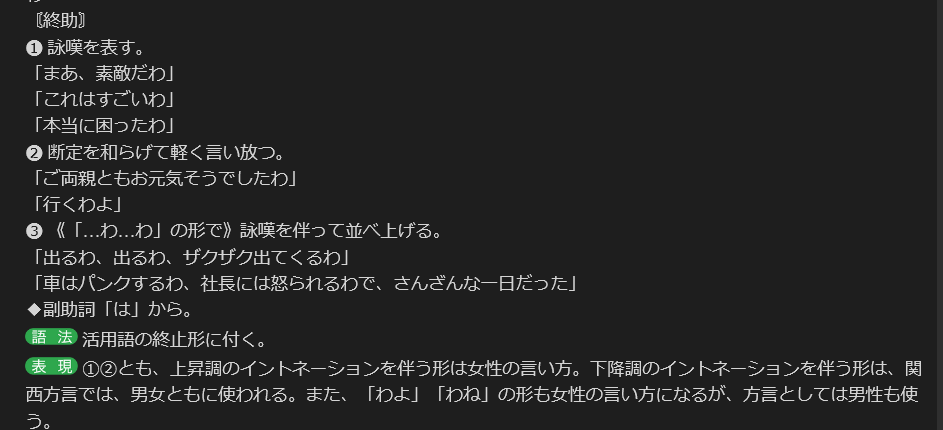
I will skip over the details but it basically the same things except that the "(female term)" part is not directly next to the first meaning. It's in the last part:
①②とも、上昇調のイントネーションを伴う形は女性の言い方。下降調のイントネーションを伴う形は、関西方言では、男女ともに使われる。また、「わよ」「わね」の形も女性の言い方になるが、方言としては男性も使う。
Basically, if it's a rising intonation, it's a female way of speaking. If it's not rising, it's a kansai dialect used by both men and women. If よ or ね is added, it's a female way of speaking in standard japanese. But in dialects, it's also use by men. And except for pure Tokyoite, there isn't a single japanese whose dialect doesn't get mix a little in their standard japanese.
In addition to that, those information are outdated since kansai expressions has been popularized since quite a bit of time by kansai comediens and after that by youtubers, to the point where the kansai dialect version of わ became a part of... standard japanese (and I hear it almost everyday from friends or on youtube, female or male).
Anyway, I can't explain everything (because I still don't know everything and I already spend way too much time writing that) but Japanese is full of that stuff. I hope that explanation on, at least, one case can help a bit. It's quite fun when you start to understand that kind of things :3 (but also quite complicated and they are a lot of "too much" simplified explanation on the english side)


