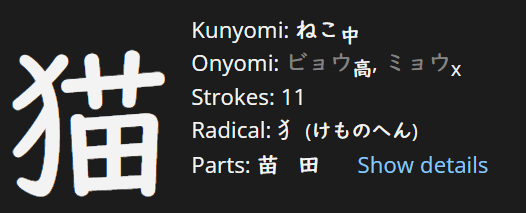
Kanji are logographic characters, historically adapted from Chinese. Logographic in the sense that each character represents a word. For example: 猫 means "cat".
Kanji have two different "categories" of readings:
Kunyomi (訓読み), which are typically associated with native Japanese words and are used when the kanji is by itself or followed by okurigana (e.g. 見る ← the る is the 送り仮名(おくりがな), 花, 人)
Onyomi (音読み), which are based on the original Chinese sounds and are typically used when you have multiple kanji "stuck" together to form a compound noun, e.g. 愛猫 (あいびょう) ← here you can see the same 猫 character, but this time it's read びょう
The little 中 (middle school)、高 (high school)、小 (primary school)、x (not taught in school), symbols mark when natives learn each reading.
You don't really need to worry about all of the details for now. You could even stick to learning words without kanji for a bit longer. Not need to rush.
When you decide to start learning them, make sure you're not going too fast, 1 or 2 a day is more than enough. It might seem slow, but you'd actually be learning them much faster than native students :)