和英辞典Vocabulary dictionary

漢字辞典 Kanji dictionary

文法辞典 Grammar dictionary

例文検索 Sentence lookup

test


Because of A; due to A
  1. Because of A; due to A
  2. For the purpose/sake of A; in order to A
23
休 校 は 雪 の 為 で あ っ た 。 
The closing of school was due to the snow.
0
18
バ ス は 交 通 渋 滞 の 為 に 遅 れ た 。 
The bus was late because of the traffic jam.
0
20
其 の 試合 は 、 雨 の 為 に 中 止 為 れ ま し た 。 
The game was called off because of the rain.
0
16
其 の 計 画 は 資 金 不 足 の 為 に 遂 に 放 棄 為 れ た 。 
The plan was given up in the end because funds ran short.
0

Getting the sentences
Construction
(Elements in parentheses are optional.)
AVerb: Casual
 
Aい-adjective
 
ANoun の
 
Aな-adjective な
 
 
ために
Basic Examples:
危険な為 (because (something) is dangerous)

暑い為に (because it's hot)

来る為 (due to (something or someone) coming)

大雨の為に (due to heavy rain)

Where this grammar is found


Grammar usage notes

Using ため means "Because of A" or "Due to A". While ために would be "For A" or "For the sake of A".
45
0
avatar
Kiezuu
Level: 34
原因、理由を言う
1
0
avatar
リンク・リンク
Level: 1524
雪のために、全てが白になりました is translated as "Because of the snow everything turned white." And notice that this example has のためで. So I don't really understand the difference between のためで, のためにand のため.
4
0
avatar
Ianji
Level: 298
機能:原因・理由

形:普通の形+ため____。

意味:原因だから、結果。

※ N =「だ」→「の」
※ なA =「だ」→「な」
0
0
avatar
猛眼
Level: 1652

Questions/Discussion

Generally used in writing, or in more ‘presentation’ situations, like a news anchor or train conductor.
2
0
avatar
甘いコール
Level: 333
 
For the purpose/sake of A; in order to A
  1. Because of A; due to A
  2. For the purpose/sake of A; in order to A
19
私 は 着 替 え る 為 に 家 に 帰 っ た 。 
I went home in order to change my clothes.
0
59
貴方 を 愛 す る 為 に 私 は 生 ま れ た 。 
I was born to love you.
0

Getting the sentences
Construction
(Elements in parentheses are optional.)
AVerb: Dictionary Form
 
ANoun の
 
AVerb: ない form
 
 
ために
Basic Examples:
行ける為に (so (I) can go)

貴方の為 (for you)

落ちない為に (so (you) don't fall)

Notes
The に is ために cannot be dropped if the ために and main verb are separated (by nouns + particles such as が、に、で、を, etc.)
Related Expressions
のに
ように
Where this grammar is found


Grammar usage notes

Nothing posted yet!

Questions/Discussion

Nothing posted yet!

Discussion about this grammar
This section has been archived, and no new posts can be added. Please use the discussion form(s) above.
avatar
mireille
Level: 1
1. meaning: な adjective + な + ため・ために
2. meaning: ない form verb + ため ・ ために
(Unicom - Bun no Rule)
1
16 years ago
avatar
マイコー
Level: 346
Added!
2
16 years ago
avatar
Hzin
Level: 1
Noun + の + ため + の + Noun Verb (plain nonpast) + ため + の + Noun for [the sake of ...] for [the purpose of doing something] N1,N2,N3,N4,N5 は 何レヴェル,わかりません?
2
13 years ago
avatar
catgirl
Level: 133
[quote author=Hzin link=topic_id=5060&post_id=30318#rmsg_30318 date=1379223804]Noun + の + ため + の + Noun Verb (plain nonpast) + ため + の + Noun for [the sake of ...] for [the purpose of doing something] [/quote] Could you please give an example for the two constructions? Thank you!
2
13 years ago
avatar
マイコー
Level: 346
テストの為の勉強 is one.. テストを受けるための勉強 is one along the same lines.
3
13 years ago
avatar
catgirl
Level: 133
Thanks for the examples! I couldn't think of any myself, but now I see how the construction works :D
1
13 years ago
avatar
Lang_learner
Level: 1
what is the difference between ため and から for "because"? thanks in advance! :)
1
13 years ago
avatar
できるだけ
Level: 28
ため is a noun, and you can generally think of it as "purpose" or "reason." It functions grammatically the way nouns normally do, so you can use it with a verb (雨が降っているため), an adjective (寒いため), or a noun + の (台風のため). When used as part of an adverb phrase giving a reason, it's frequently seen as ために. から is a conjunction - it's a lot more like English "because." Unlike ため, you can use it with です・ます verbs as well as plain form; also unlike ため, it needs to follow です or だ when used with a noun (雨だから).
7
13 years ago
avatar
Lang_learner
Level: 1
Oh ok, thanks for clearing that up for me できるだけ! It is much appreciated! :)
0
13 years ago
avatar
benjiz
Level: 6
I dont see how the example 「主に貴方のお陰で成功した。」 has anything to do with this grammar point ;)
1
12 years ago
avatar
マイコー
Level: 346
Removed it, thanks!
0
12 years ago
avatar
htatsuha
Level: 1147
Both of the example sentences that go with the Kao pictures on this page are for the second grammar point on the page, even though the first one is shown next to grammar point 1.
0
7 years ago
avatar
マイコー
Level: 346
Nuts, how did we accidentally do two for the same grammar expression? :(
0
7 years ago
avatar

In the user notes under the first usage of ため(に) it differentiates that including に transforms the meaning from causative (because of A) to “for/for the sake of”. However the ために quick examples and example sentences don’t seem to use it in this way. Can anyone confirm in what way the particle に modifies ため and when to use it?

0
3 years ago
avatar
gdartfow
Level: 2380

I think it could have been better phrased...

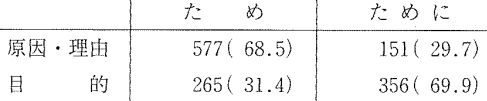
ため usually indicates a cause and ために usually indicates a purpose, but it's not absolute.

Research suggests it's about a 70%-30% split for both (taken from *):

You can differentiate the meanings based on either construction (only the first meaning allows adjectives) or by context - an uncontrollable action/situation (e.g. rain or traffic) would signal a cause, while a controllable one, a purpose.

* https://eprints.lib.hokudai.ac.jp/dspace/bitstream/2115/45643/1/BISC008_002.pdf

5
3 years ago


Loading the list
Lv.

Sorry, there was an error on renshuu! If it's OK, please describe what you were doing. This will help us fix the issue.

Characters to show:


Use your mouse or finger to write characters in the box.
■ Katakana ■ Hiragana